
The operational intelligence Shopify does not provide.
As a Shopify store passes £1M, the processes that built it begin to constrain it. We measure where that costs you, then build only what the arithmetic justifies.
Growth does not create inefficiency. It reveals it.
The coordination work your team absorbed at £500,000 does not scale to £5M. It does not announce itself either — it is distributed across shipping premiums, wasted media spend, markdown and labour, which is why it rarely appears as a line anyone reviews.
Three examples we find in almost every store we examine.
-
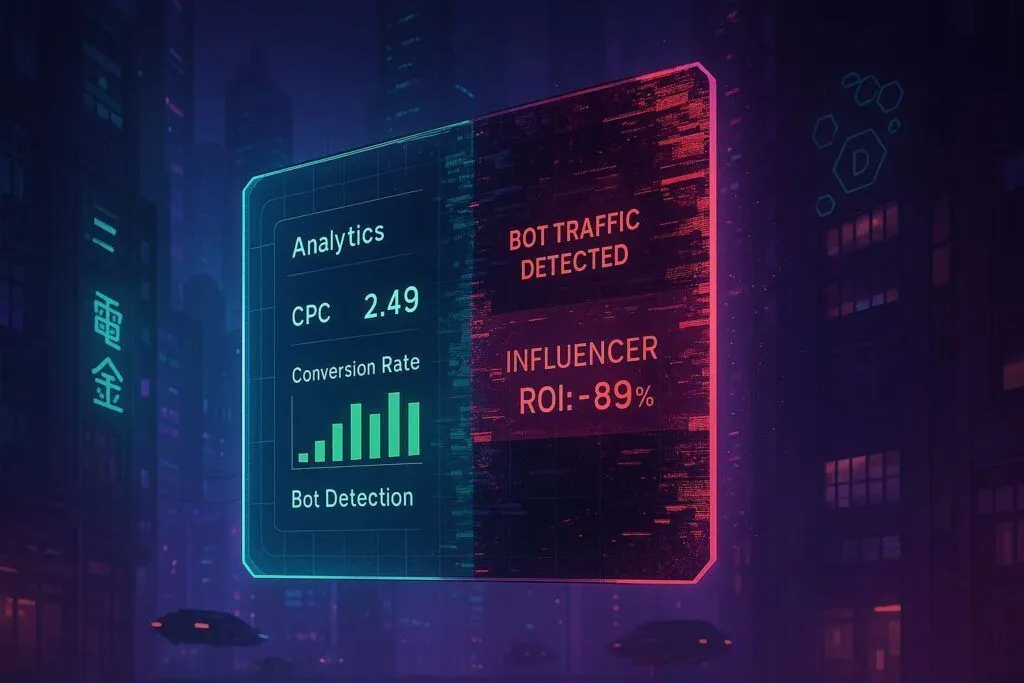
Advertising spend against out-of-stock products
Campaigns continue running after inventory reaches zero. The spend is real, the click is real, and the order cannot be fulfilled.
-

Stock held in the wrong location
Inventory sits in Manchester while orders arrive from London. The team arranges emergency transfers and absorbs premium shipping, and the cost lands across two different codes so nobody totals it.
-

Critical alerts buried in routine volume
Teams receive around 200 notifications daily across Shopify, email, Slack and warehouse systems. The stockout warning arrives alongside everything else, and is read three days late.
Every figure above is modelled from typical inputs. We verify each one against your own data before recommending anything.
Six solutions. We build only the ones your figures support.
-
01
Ad Spend Control
Pauses campaigns on out-of-stock SKUs within minutes of the stockout, linking your inventory position directly to Meta, Google and TikTok.
Learn more -
02
Inventory Alert Triage
Reduces 200 daily notifications to five prioritised actions, each with a defined next step and an escalation path if it is not acknowledged.
Learn more -
03
Inventory-Aware Messaging
Back-in-stock, abandoned cart and browse recovery, triggered on actual inventory position rather than an assumed one.
Learn more -
04
Multi-Warehouse Balancer
Monitors days of cover across every location and generates transfer orders before an imbalance becomes an emergency.
Learn more -
05
Supplier Order Optimisation
Automated purchase orders built from sales velocity, lead time and geography rather than a fortnightly spreadsheet review.
Learn more -
06
Return Processing Automation
Reduces return-to-resale from ten days to twenty-four hours, so stock re-enters inventory inside its selling window rather than after it.
Learn more
How an engagement works
-
We measure first
Every engagement opens with a diagnosis of your actual figures, at £2,500 and credited in full against implementation. You see the model and its assumptions before you commit to anything further.
-
We build only what pays back
If the arithmetic does not justify a solution for your store, we say so. This happens, and we would rather tell you at the diagnosis than at the invoice.
-
Implementation is two to four weeks
From data access, depending on the solution, integration complexity and the responsiveness of third-party systems.
-
An implementation fee and a monthly retainer
Contracted for the first twelve months and rolling monthly afterwards. You own the system outright — the retainer covers maintenance and adjustment, not access.
-
Payback runs from three months for the fastest solutions to twelve for the slowest
Measured against total first-year cost. Each solution page states its own range, and the diagnosis produces yours before you commit.
Why Luxia
-
You own what we build
No third-party licence, no subscription, no vendor lock-in, and no waiting for an app developer to add the feature you need.
-
Bespoke, not generic
An app serving 100,000 stores handles the common case and fails on yours. We build for your workflow and your systems.
-
Diagnosis by an operator
Founded by Geoffrey Idun, who spent twenty-five years in retail operations and branding. The problems are identified by someone who has run them, not inferred by a developer.
-
Enterprise engineering discipline
Our development lead has worked with Rolls-Royce, Formula 1, McKinsey and Nissan. That standard of error handling, testing and documentation applied to mid-market Shopify operations.
For Shopify Plus agencies
Operational automation is the scope your clients ask for and you would rather not build. We deliver it under your brand, to your standard, and we do not approach your clients independently.
Where is your money going
The Operational Health Scorecard returns a modelled leakage figure for your store in about four minutes.
No call required.
Take the Operational Health Scorecard